Ceiling Fan Installation & Replacement
Ceiling fan installation isn't just swapping a fixture — the box must be fan-rated to hold the weight and motion, and the wiring must support separate fan and light control. An electrician checks support and wiring. VoltEdge Electric is a free referral service that connects you with an independent local electrician — you work directly with the electrician you choose.
- Connected with an independent local pro — never a call center queue.
- The process explained up front, before anyone opens the panel.
- Serving all 50 states.

A ceiling fan looks like a simple fixture swap until you consider what it actually is: a heavy, spinning motor hanging over your head. The electrical box has to be fan-rated — built to carry the weight plus the constant motion. A standard light box isn't, and a fan hung on one will work itself loose over time.
The wiring matters too. Fans with separate light kits need the right conductors for independent fan and light control, whether that's separate wall switches or a remote receiver in the canopy. Getting the support and wiring right is what separates a fan that runs quiet for years from one that wobbles from day one.
VoltEdge Electric is a free referral service — we don't install fans ourselves. Tell us whether it's a replacement or a new location and we'll connect you with up to three independent local electricians. VoltEdge Electric connects you with an independent local electrician — you work directly with the electrician you choose.
- Typical first step
- Cut power to the affected area if it's safe to reach the breaker, then document what you see, smell, or hear.
- Emergency capable
- For active emergencies, call and we'll route you immediately.
Warning signs
Signs you need this service
- A fan that wobbles, clicks, or has worked itself loose over time.
- A room with only a light fixture where you want a fan.
- A fan that's noisy on every speed setting.
- No wall control — you're stuck with pull chains.
- An old, inefficient fan worth replacing with a modern one.
What happens
The process, step by step
Support check: the existing box is inspected — fan-rated stays, light-only gets replaced with proper bracing.
Wiring review: conductors are checked for separate fan and light control options.
Hang and wire: the fan is mounted to the rated box, wired, and balanced.
Controls test: wall switches, remotes, and all speeds are tested before the electrician leaves.
Cost factors
What influences the cost
Every job is different, so we won't quote prices sight unseen. These are the factors a pro will weigh when pricing your job:
- Whether the existing box is fan-rated or needs a retrofit brace.
- Wiring for separate fan and light control versus single-switch operation.
- Ceiling height and slope — high or angled ceilings need downrods and adapters.
- Fan features — remote, smart control, or integrated lighting add complexity.
- Removal and disposal of the old fan or fixture.
DIY guidance
What you can do — and when to stop
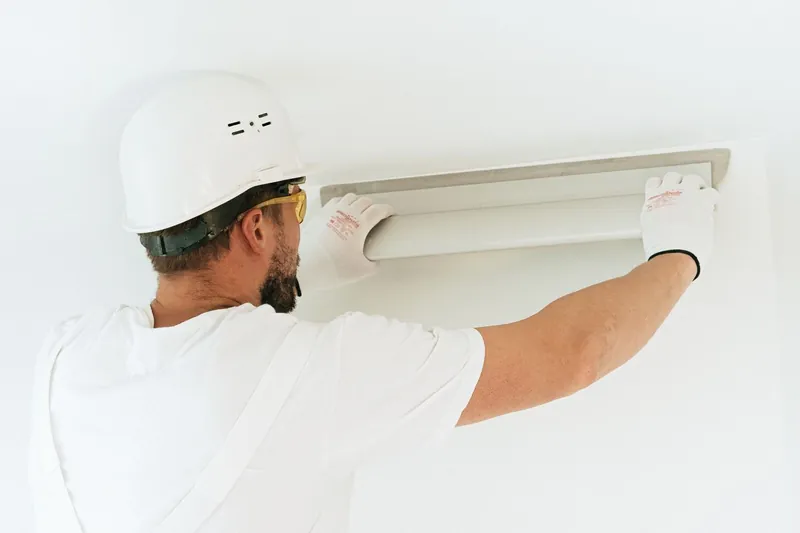
Safe to do yourself
- Choose the right fan size for the room — blade span should suit the square footage.
- Decide between wall-switch, remote, or smart control.
- Clear the room and provide a sturdy step ladder for install day.
- Note the ceiling height and whether it's sloped.
Stop and call a pro
- Hanging a fan on a standard light box — it must be fan-rated with proper bracing.
- Wiring a fan while the circuit is live.
- Ignoring a wobble — it loosens mounting hardware over time.
- Mounting without checking that the box is secured to framing.
Frequently asked questions
Serving towns nationwide
Related services

Helpful guides
Electrical problem? Don't wait on it.
Tell us what's happening and we'll connect you with an independent local electrician who fits the job.